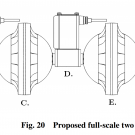
By nesting plenums (pressure vessels) within one another, the total volume of a cold gas propulsion system can be decreased, and the resulting release of propellant if a valve fails open can be better predicted, allowing for an appropriate reaction to be planned in advance.
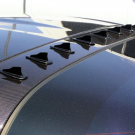
Using microphones installed in a wing in a wind tunnel, boundary layer separation could be identified, automating the deployment of vortex generators to delay the onset of stall at high angles of attack.
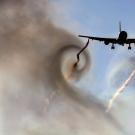
Using computational fluid dynamics (CFD), the vortices trailing from aircraft wings are simulated to understand how to protect other aircraft flying in the same area.