Visual navigation is critical for close-proximity inspection success. Software is being written that can transform a 2D visual image of a target into 3D relative pose measurements.
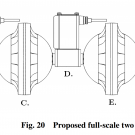
Repurposed hard disk drives can be used for small satellite attitude control, promising to reduce the cost for CubeSats that require three-axis pointing.
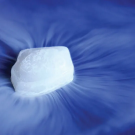
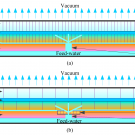
CubeSats are becoming more capable but are still limited compared to full-scale satellites. Typically, there is no thermal control system to dissipate heat from the CubeSat avionics which limits the onboard computing power. A thermal control system will allow CubeSats to fly more powerful computers, enabling more complex experiments to be conducted. Sublimators are a passive thermal control option with proven flight history.
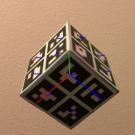
Cameras' small footprint and power requirements make them desirable sensors for measuring a satellite's pose; however, transforming a 2D image into a 6 degree-of-freedom estimation is not trivial. Different approaches for fiducial markers have benefits and limitations for pose estimation.
By nesting plenums (pressure vessels) within one another, the total volume of a cold gas propulsion system can be decreased, and the resulting release of propellant if a valve fails open can be better predicted, allowing for an appropriate reaction to be planned in advance.