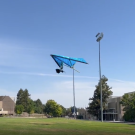
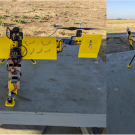
Many high-altitude balloons rely on physical storage for their mission data, yet many are never located after flight. An autonomous, deployable hang glider was developed and tested to deliver high-altitude payloads to a safe, predetermined landing site.
This project aims to develop the first agricultural drone that can take off like a helicopter, transition to wing-supported high-speed flight like an airplane, and then land like a helicopter.
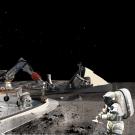
Maintaining a "digital twin" enables prognostics to better understand and predict the behavior of a complicated physical system. This is especially valuable in spaceflight applications, where the system is often bespoke and failure has high consequence.